The 15-Minute Bankroll: What Happens When Game Day Gets a Second Wagering Window
Photo: Art (RUS) Potosi, CC0, via Wikimedia Commons
The Whistle That Starts a Second Game
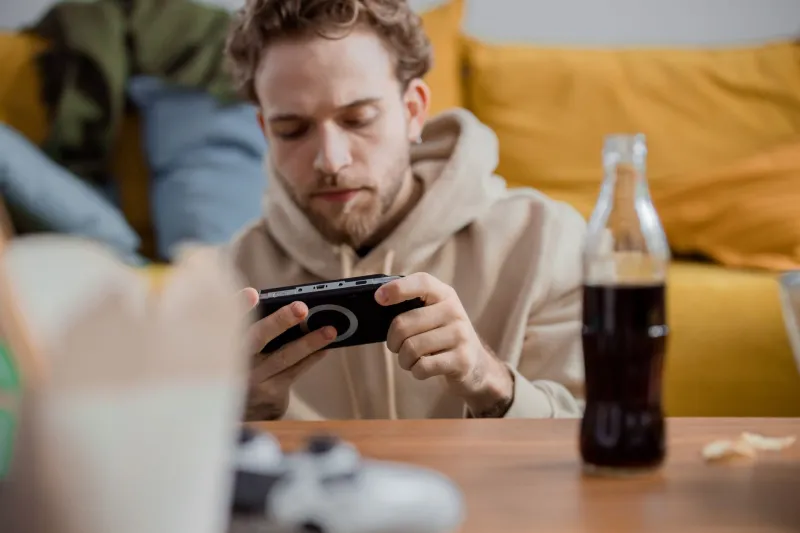
There's a moment every NFL Sunday that looks identical in living rooms across America: the clock hits zero on the first half, the TV cuts to a studio desk, and thousands of thumbs reach for their phones.
Not for the highlight reel. Not for the halftime score app. For the casino.
"I probably look like I'm checking my fantasy team," says Marcus, a 34-year-old Bears fan from Illinois who asked that we use only his first name. "But no. I've got a 12-minute window. That's like two bonus rounds on my favorite slot. It's become part of the routine, honestly. Snacks at kickoff, spins at halftime."
Marcus isn't an outlier. Mobile casino traffic during major sporting events has quietly become one of the most reliable patterns in the industry — a second wagering window hiding inside the first one.
Game Day Was Already Expensive. Now There's a Second Tab.
Here's what makes the halftime session different from ordinary mobile play: the money mindset is already loosened.
If you've got action on the game — a spread bet, a survivor pool, a same-game parlay you spent 40 minutes constructing — your brain has already categorized today as a "betting day." The psychological firewall that usually stops you from opening the casino app on a random Tuesday simply isn't up.
"It's what we call spend momentum," explains Dana Okafor, a consumer behavior researcher who studies gambling habits. "Once a person has crossed the threshold of wagering for the day, additional wagers feel like extensions of an existing decision rather than new ones. Halftime play exploits that. The bet is almost made before the app even opens."
Add in the emotional state — your team either up big or getting blown out, adrenaline in both directions — and you've got a 15-minute window where judgment is at its loosest and the phone is already in your hand.
The Ritual Players Describe
Talk to enough game-day casino players and the rituals start to rhyme:
- The Blown Cover Bounce. Your parlay died on a garbage-time touchdown. Halftime slots become the "get it back" session. This is the most dangerous pattern of the three, and players know it. "I only spin when we're winning," one Titans fan told us, only half-convinced.
- The Victory Lap. Team up 17 at the break? A few celebratory spins with money you'd already mentally written off. Feels harmless. Sometimes it is.
- The Boredom Fill. No emotional trigger at all — just 15 minutes of studio analysis you've heard a hundred times, and a slot game that's more interesting than a retired kicker talking about wind conditions.
The third category is the one that surprises people. For many players, halftime play isn't about the game at all. It's about the gap.
Does the Micro-Session Help or Hurt?
The honest answer: it depends almost entirely on structure.
The case it can work: A defined window — roughly 12 to 18 minutes of halftime plus commercials — is one of the few natural stopping points in mobile play. Unlike the endless scroll of a standalone session, the third quarter will start whether you're ready or not. Players who set a fixed halftime budget (say, $10–20, separate from their sports bets) report that the game itself acts as their timer.
The case it hurts: When the session bleeds. A slot bonus round doesn't care that the second half kicked off. Players describe looking up to find the third quarter underway, their slot session now competing with the actual game — and their attention splitting in ways that make both worse. Worse still, losses from the halftime session can trigger chase bets on the second-half lines, compounding one bad window into a bad afternoon.
"The players who manage this well treat halftime play like a concession stand," says Okafor. "You bring a set amount, you spend it, and when the whistle blows, you're done. The players who struggle treat it like the ATM."
Three Rules for the Halftime Player
If the second-screen, second-session game day is your new normal, a few guardrails go a long way:
- Fund it separately. Decide your halftime amount before kickoff and keep it apart from your sports bankroll — physically, if you can, in a separate app balance or budget line.
- Pick games that respect the clock. Fast, simple slots with no long bonus narratives fit the window. Anything with a 40-spin feature you'll want to see through doesn't.
- Let the whistle be the wall. When the second half starts, the app closes. Not when the bonus ends. Not when you're even. When the whistle blows.
The New Shape of the American Game Day
Nobody planned this. There was no meeting where the industry decided halftime would become a casino session. It happened because smartphones put a casino in the pocket of every sports fan, and the sports calendar gave them a built-in excuse to open it.
For some, it's a harmless garnish on an afternoon they'd enjoy anyway. For others, it's the second wallet leak on a day that already had one. The difference, as always, isn't luck — it's whether you walked into the window with a plan.
The whistle blows either way. The only question is whether you're done when it does.