Six Inches of Vegas: Can a Human Dealer Really Survive the Vertical Screen?
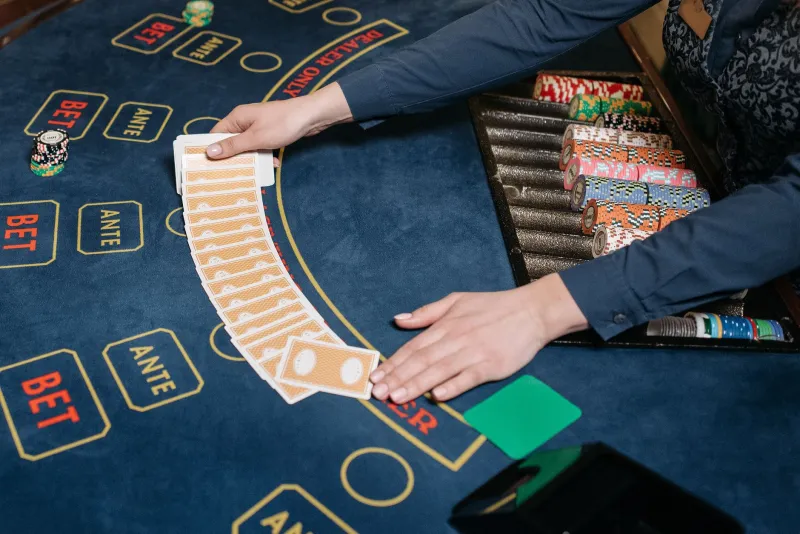
There's a moment every live dealer player on mobile knows: you join a blackjack table, and the dealer's face is cut off at the forehead while the shoe of cards takes up half your screen. You squint. You rotate your phone. Your neighbor on the train glances over. It's awkward, and it's a problem the live casino industry has only recently started taking seriously.
Live dealer games were born on desktop. The studios were designed around wide camera feeds, sprawling multi-angle layouts, and players sitting in desk chairs with two monitors. But the numbers don't lie — the majority of US online casino play now happens on a phone, usually held one-handed, usually in a vertical orientation. That mismatch between how studios produce their games and how Americans actually watch them has created what some in the industry are calling the last real frontier of mobile casino innovation.
The Vertical Problem
Think about what a live casino feed is optimized for. A standard studio stream assumes a 16:9 widescreen frame: the table stretches across the middle, the dealer stands behind it, and the interface — bet buttons, chat, statistics — floats around the edges. Drop that same feed onto a phone held upright and you get the worst of both worlds. The video shrinks into a letterboxed strip, and the controls take over the rest.
Some studios responded by simply telling players to rotate their phones. That works at your desk. It does not work on the subway, in bed, or during a lunch break at work. If the industry wants the mobile player — and it absolutely does — it has to rebuild the experience around the vertical frame, not around the desktop legacy.
Rebuilding the Studio Shot by Shot
The changes happening inside live dealer studios right now are more dramatic than most players realize.
Camera work is being rethought entirely. Newer mobile-first tables use tighter, higher framings that keep the dealer's face and the card area in view on a tall, narrow screen. Some studios run dedicated vertical feeds — a separate camera angle produced specifically for portrait mode — rather than cropping the widescreen shot. The difference is immediate: instead of a tiny window with invisible cards, you get a feed that fills your screen and reads clearly at arm's length.
On-screen text is getting bigger and simpler. Card values, bet timers, and results are being overlaid directly onto the video in large type, because studio designers finally accepted that nobody wants to pinch-zoom a blackjack result.
Chat moderation is a mobile-native job now. On desktop, chat is a side panel. On a phone, it's a scrolling overlay, and a table with a rowdy crowd can turn unwatchable fast. Studios are investing in faster moderation, smarter filters, and even opt-out chat modes — because a dealer's personality only lands if the noise around it doesn't drown it out.
Does the Human Touch Survive the Shrink?
Here's the interesting question at the heart of all this: does the core appeal of live dealer games — the human being on the other side of the camera — survive being compressed to six inches?
The case for yes: intimacy might actually improve. On a phone, the dealer fills more of your visual field than they ever did on a desktop monitor. Eye contact through a lens reads as eye contact to you, personally. Some players describe mobile live tables as feeling less like a broadcast and more like a FaceTime call with someone dealing you cards. When the production is done right, the small screen doesn't shrink the experience — it focuses it.
The case for no: attention is scarcer on mobile. You're playing with one thumb, half your focus, notifications buzzing. The dealer's banter, the studio ambience, the social texture of the table — a lot of that gets lost when your screen is competing with your group chat. The studios that win on mobile aren't the ones with the prettiest sets; they're the ones whose games still make sense when you glance down for three seconds at a time.
How to Spot a Mobile-First Live Platform
If you're shopping around for live dealer games on your phone, here's a quick checklist drawn from what the best studios are doing:
- Test portrait mode first. Join a table without rotating your phone. If the layout fights you, the studio hasn't done its homework.
- Check the card legibility. Can you read a dealt hand without zooming? That's table stakes — literally.
- Look for dedicated mobile tables. Some studios run separate vertical-optimized tables with faster betting rounds, built for shorter mobile sessions.
- Try the chat controls. Good platforms let you mute, minimize, or filter chat in one tap.
- Watch your data. Live video streams are heavy. The better platforms offer adaptive streaming that holds up on cellular connections — worth testing on LTE before you commit.
The Royal Flush Is Still the Goal
None of this changes what live dealer games are at their core: the closest thing to sitting at a real table without leaving your couch. What's changing is the delivery. The studios that treat the phone as the primary screen — not the fallback — are the ones shaping where this category goes next.
For US players, that's good news. The vertical-screen era of live casino is still young, and the gap between the best and worst implementations is enormous. Pick your tables the way you'd pick a seat at a physical casino: where the view is clear, the pace suits you, and the dealer makes you want to stay for one more hand.
The cards don't care how big your screen is. But your experience absolutely does.