Bet on the Map: The US States Where Mobile Gaming Is Absolutely Exploding Right Now
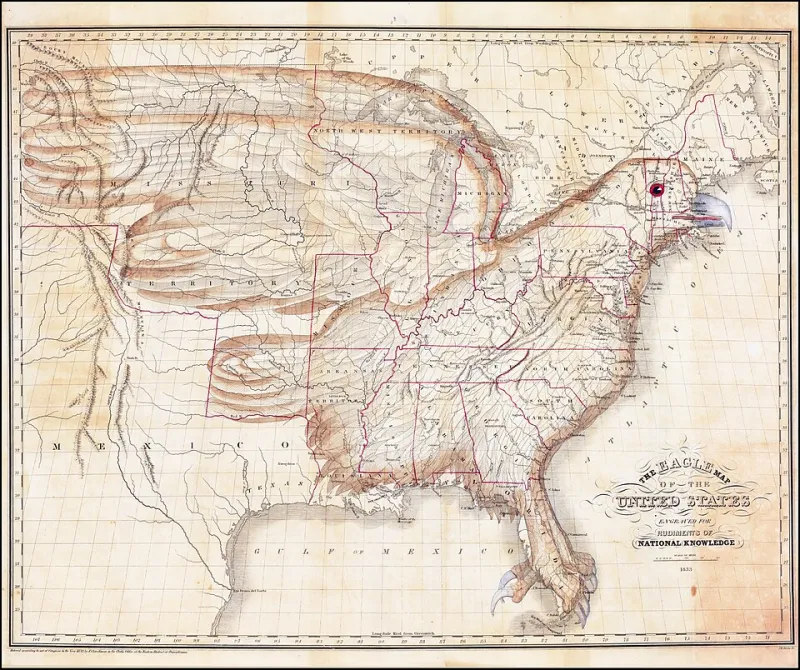
Photo: Isaac W. Moore (engraving) / Published by E. L. Carey & A. Hart, Philadelphia, Public domain, via Wikimedia Commons
America has always had a complicated relationship with gambling. For decades, what happened in Vegas stayed in Vegas — mostly because Vegas was one of the only places it could happen. Then the internet arrived, then smartphones, and now in 2024, a player in rural Montana has access to the same mobile casino experience as someone sitting in a penthouse suite on the Las Vegas Strip.
But not every state is taking advantage of that access equally. Across the country, mobile gaming adoption is telling a wildly uneven story — one shaped by state law, population density, marketing reach, and plain old regional culture. Here's a look at where things are heating up the most, and why.
The Usual Suspects: States That Were Always Going to Lead
Let's start with the obvious ones, because they're obvious for good reasons.
New Jersey has been the quiet powerhouse of regulated online gaming in the US since it opened the door back in 2013. By 2024, the state's mobile gaming market has matured into one of the most competitive in the country. Players here are sophisticated — they comparison-shop platforms, they understand RTP, and they know their way around a welcome bonus. The Garden State isn't the fastest-growing market anymore, but it's arguably the deepest.
Pennsylvania followed New Jersey's lead and has been one of the most aggressive growth stories of the past few years. Philadelphia and Pittsburgh provide dense urban player bases, but what's interesting about PA is how strongly mobile gaming has taken hold in the state's smaller cities and suburban areas. Residents who wouldn't drive two hours to a casino are logging into mobile platforms from their living rooms every night.
Michigan rounded out its regulated online gaming framework and hasn't looked back. Detroit's gaming culture runs deep, and that enthusiasm transferred to mobile almost immediately. Michigan players skew younger than the national average, which tracks with the state's strong college-town presence in cities like Ann Arbor and East Lansing.
The Surprise Contenders: States Nobody Expected to Boom
Here's where it gets interesting.
West Virginia might not be the first state that comes to mind when you think about tech-forward gaming, but the state has been quietly building one of the more engaged mobile player communities in the country. With limited entertainment infrastructure in many parts of the state, mobile gaming fills a genuine gap. Players in WV tend to have longer average session times than their counterparts in more entertainment-saturated markets — they're not just dabbling, they're committed.
Connecticut launched its regulated online gaming market relatively recently, but the rollout has been sharp and the uptake impressive. The state's proximity to New York — where full online casino gaming remains unavailable — has created an interesting dynamic. A meaningful portion of Connecticut's mobile gaming traffic comes from players who live just across the border or who are passing through. It's a geographic quirk that's turned the state into a regional hub of sorts.
Florida is a massive wildcard. The state's legal landscape around online casino gaming is still evolving, but the sheer size of its population and its massive tourist footprint make it impossible to ignore. Sports betting has already taken hold in Florida, and mobile casino activity in the state continues to grow in ways that are difficult to fully quantify but impossible to miss in traffic data.
The Regional Divide: Why Some States Are Barely Moving
Not every state is seeing growth, and the reasons vary significantly.
In parts of the Deep South, cultural attitudes toward gambling remain a genuine barrier to adoption. States like Alabama and Mississippi have limited regulated gaming infrastructure, and while social casino gaming is popular, real-money mobile wagering hasn't found the same foothold it has elsewhere.
In the Mountain West, the story is more about market maturity. States like Nevada and Colorado have had legal sports betting for a while, but the expansion into full mobile casino gaming has been slower. Nevada in particular is an odd case — the state that invented American gambling culture has been surprisingly cautious about how it handles online play, creating a gap between its land-based dominance and its digital presence.
What's Actually Driving the Growth?
Look past the state-by-state numbers and a few consistent themes emerge.
Regulation clarity is the single biggest accelerant. States where the legal framework is clean and well-communicated see faster adoption. Players don't want to wonder if what they're doing is allowed. When a state makes the rules clear and licenses legitimate platforms, player confidence follows.
Marketing saturation matters — until it doesn't. In early-stage markets, aggressive advertising drives trial. But in more mature markets, brand loyalty and user experience become the deciding factors. Players who've been around for a year or two aren't choosing a platform based on a billboard; they're choosing based on how the app actually feels to use.
Demographics are shifting the map. The 25-40 age bracket is the core of mobile gaming growth across every region, and this group is more geographically dispersed than the traditional casino demographic. They're in mid-size cities, suburbs, and college towns — not just the traditional gaming corridors.
What 2024's Map Tells Us About 2025
The states that are winning the mobile gaming race right now have a few things in common: regulatory clarity, engaged younger player bases, and platforms that genuinely deliver a quality mobile experience rather than a desktop site that happens to load on a phone.
For players on SkyCrown, the takeaway is simpler. Wherever you are in the US, the mobile gaming landscape around you is changing faster than at any point in history. Whether your state is a mature market or an emerging one, the experience in your pocket is getting better, more competitive, and more tailored to how Americans actually want to play.
The geographic gold rush is real. And unlike the original one, you don't have to move to California to get in on it.